If you ask someone for their best recipe, you get a list of ingredients. If you ask them about the night before they left home, you get the recipe, the kitchen it was made in, and the person who made it.
So that is where we start.
The questions that open a kitchen
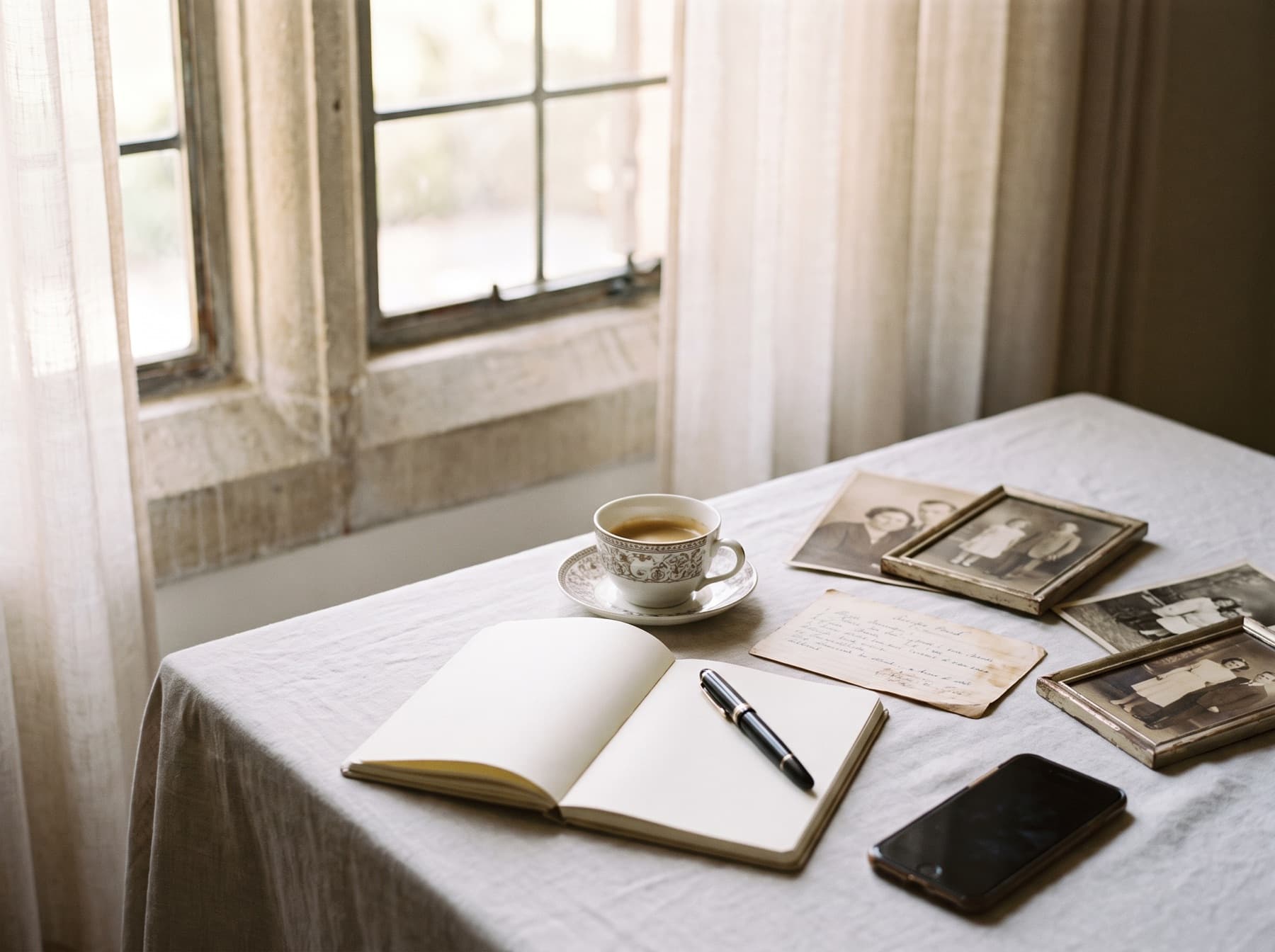
Our interviews happen at the table, in person. No app, no link, no form to fill in. Just a conversation, recorded, with two people whose whole job, that afternoon, is listening. And the first questions are never about food directly.
- What was on the table the night before you left home?
- Who cooked when you were sick?
- What did your house smell like on a Sunday?
- Which dish did you learn by watching, because nobody would tell you?
People answer these with their whole life. The dish shows up on its own, usually in the second or third minute, along with the story that makes it matter.
We don't ask for the recipe. We wait for it.
Why we keep the recording
A recipe can be retyped. A voice can't. Every story in the book carries a small code beside it, and when you scan it you hear the person telling it, in their own words, with the pauses and the laughing in the middle.
The grandchildren who never met the cook will know how she sounded. That is worth more than any ingredient list.