Turning dinner parties into a new going-out culture
Going out stopped being worth the money, so a generation stayed home.
Ricardo, Founder · August 24, 2026 · 4 min read
Ask anyone under thirty why they did not go out last weekend and you will get a version of the same answer: it was not worth it.
They are not being dramatic. The Harris Poll surveyed 4,100 American adults in May and June, 603 of them Gen Z, and among the Gen Z respondents, 68% said going out is not worth "the damage it does to my wallet." Sixty-two percent had skipped making weekend plans at all, specifically to avoid the regret waiting in the banking app on Sunday. Libby Rodney, the pollster's chief strategy officer, put it plainly: "We call it placing financial regret over FOMO."
So they stayed home. Seventy-three percent now say staying in is the default weekend plan, not the fallback.
And then the other number in the same survey: 51% reported feeling lonely on weekends. That is the highest of any generation, and more than three times the rate among Boomers, who came in at 14%.
That is the whole story in two figures. Staying in solved the money problem and quietly created a different one.
The dinner party is not "staying in"
This is where it gets interesting, because the fix for staying in is not going back out.
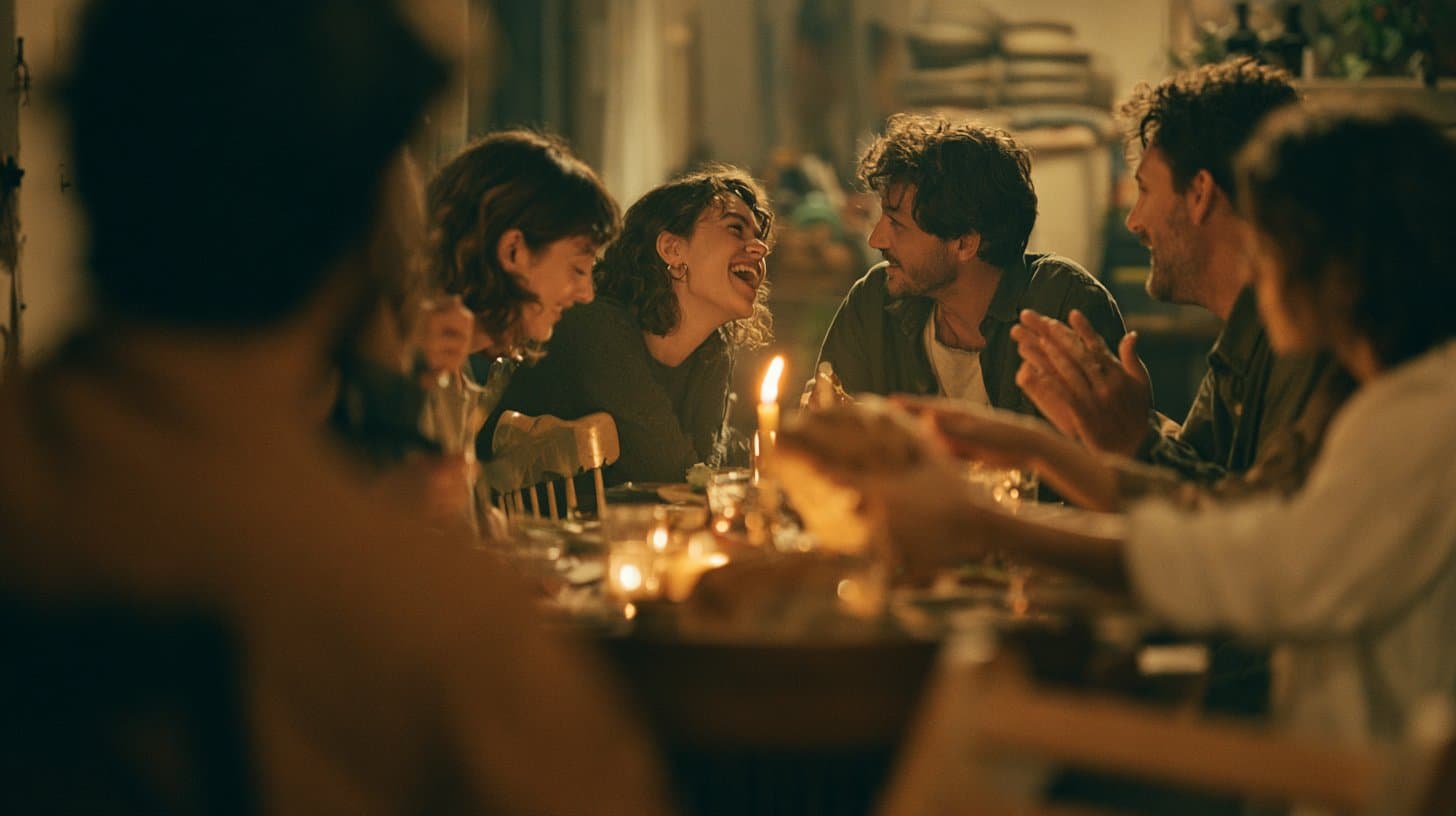
What is actually happening is that people are staying in together. The gathering moved into apartments. Somebody makes pasta in a bowl too big for their kitchen, somebody brings the flowers from the grocery store on the corner, and six people eat off plates that do not match for four hours, which is roughly three and a half hours longer than anyone has ever stayed in a bar they were not enjoying.
The economics are obvious. Everyone chips in, nobody pays a cover, nobody pays for the ride home at two in the morning, and there are leftovers.
But the economics are not why it is spreading. Price explains why people left the bar. It does not explain why they started cooking.
The bar's engine was alcohol, and it stopped running
For most of the last century, a night out had a built-in motor. You did not need a plan or an activity, because drinking was the activity. Take that away and a bar is a loud room with expensive chairs.
That is precisely what is being taken away. In the same Harris Poll, 73% of Gen Z said they wish there were more places to gather where alcohol is not the point, and 65% said they feel more connected in a wellness setting than at a bar. This is the same generation that turned run clubs into a dating scene.
When drinking stops being the reason everyone is in the room, the room needs a different reason. Cooking is an unusually good one. It takes time, it needs more than one pair of hands, and it gives everybody something to do in the first thirty minutes, which is the only genuinely awkward part of any gathering. You cannot scroll and chop at the same time.
None of this is new, which is the reassuring part
It is tempting to file this under Gen Z invention. It is not one. It is a rediscovery, and the pattern is old enough to be predictable.
Britain had a supper club wave in the thirties and forties, borrowed from American cabaret, then another in the fifties and sixties. Cuba has paladares, dinner served out of somebody's front room. Across Latin America they are restaurantes de puertas cerradas, closed-door restaurants, and in plenty of places the cooking is better than what is on the licensed street outside. London spent the last fifteen years building an underground restaurant scene advertised almost entirely by word of mouth. Elsewhere the same idea travels as home bistros, guerrilla diners, pop-ups, anti-restaurants.
The pattern holds every time: when eating out gets expensive or exclusive or dull, dinner moves back into houses. Then it moves out again. Then it comes back.
What that history tells you is that this is not a fad waiting to break. It is the normal position that dinner returns to whenever restaurants stop being worth the trip.
What is genuinely new
Two things.
The first is that it stopped being formal. Nobody is doing a seating chart. The dinner party in 2026 is themed, it is a little bit online, and it is funnier than its parents' version. There are dress codes that are jokes. There is a soup night. There is a menu built entirely around a TikTok anchovy butter. The plates do not match and nobody is pretending they were meant to. It is not a performance of adulthood. It is people who are broke and busy deciding to be broke and busy in the same kitchen.
The second is that it repeats.
This is the part most coverage misses. The one-off dinner party has always existed. What is spreading now is the version that has a name, a date, and a next one. First Thursday. The soup club. Somebody's last name plus the word "supper." Once a gathering has a name and a next date, it stops being a night and starts being something people belong to, and the difference between those two things is enormous.
A night you remember. A club you plan around.
The restaurant was never the point
Restaurants were the venue, not the reason. For a long time they were the easiest venue available, so the venue got mistaken for the thing.
Now they are expensive, the drinking has slowed down, and everybody has a kitchen. So the gathering went where gatherings have always gone when the outside world gets costly, which is inside, to somebody's table, with everyone bringing something.
The interesting question is not whether this lasts. It is what a generation does with a habit like this once it has held for a few years, and what is left behind by all those Thursdays.